
Meal Prep for Busy Professionals: A Simple 60-Minute Weekly System
If you work long hours, meal prep might be the single most useful habit you can build.
Not because it makes you eat perfectly. But because it removes the part that breaks most people: having to decide what to eat when you are already tired, stressed, or in the middle of a packed day.
This guide will show you a simple, realistic meal prep system for busy professionals that takes under 60 minutes, keeps your protein high, supports fat loss, and makes the entire week easier to manage.
No complicated recipes. No hours in the kitchen. Just a repeatable system that works.
Key Takeaways
A weekly meal prep routine removes daily decision fatigue — the number one reason people fall back on takeout
High-protein meal prep keeps you fuller for longer and makes fat loss more consistent
You do not need to be a good cook — you need the right staple ingredients ready to go
The entire weekly reset can be done in under 60 minutes using five simple steps
Why Meal Prep Matters More for Busy Professionals
• For most people, the biggest nutrition problem is not a lack of knowledge. It is the gap between knowing what to eat and actually doing it when life gets busy.
• When you have back-to-back meetings, a deadline at 6 PM, and nothing prepped at home, takeout wins. Every time.
•Meal prep fixes that by changing your environment before the week starts, instead of relying on willpower in the moment. That single shift — having food ready when you are already tired — can make a bigger difference to your results than switching diets ever will.
How Meal Prep Supports Fat Loss
•When lunch and dinner are already made, you are far less likely to reach for whatever is convenient.That single shift reduces
random eating more effectively than most diets.
•Prepped meals are also almost always higher in protein than takeout, vending machines, or office snacks. More protein means better fullness, fewer cravings, and an easier time staying in a calorie deficit without feeling deprived.
•There is also the decision fatigue factor. Every food decision you make during a busy workday costs mental energy. When your meals are already chosen and ready, that energy goes somewhere more useful.
•None of this requires tracking every calorie or following a perfect meal plan. It comes naturally from having better food more available than worse food.
Meal Prep for People Who Do Not Like Cooking
A good meal prep system does not require cooking skill. It requires having the
right ingredients available.
If cooking feels like a barrier, build your system
around foods that need almost no preparation.
Quick-Prep Staples by Category
Protein
Rotisserie chicken
Canned tuna
Deli turkey
Frozen grilled chicken strips
Carbs
Microwave rice packets
Frozen potatoes
Pre-cooked pasta
Vegetables
Bagged salad greens
Pre-cut broccoli
Frozen vegetable mixes
Mix and match these and you can build a complete high-protein meal in under 10 minutes. No recipes required.
The 2-2-3 Method: The Simplest Meal Prep Framework
Instead of following a complicated meal plan, use the 2-2-3 Method:
2 protein sources
2 carb sources
3 vegetables
That is it.
With those basics, you can build multiple meals throughout the week without cooking every single day.
Example:
Proteins: chicken breast, lean ground beef
Carbs: rice, potatoes
Vegetables: broccoli, spinach, bell peppers
From those 7 ingredients alone, you can build:
•chicken rice bowl with broccoli
•beef bowl with potatoes and peppers
•chicken wrap with spinach
•beef stir fry with rice and peppers
•simple chicken salad with greens
That is 5 different meals from one prep session.

The 60-Minute Sunday Reset: 5 Simple Steps
Most busy professionals do not need a full meal prep day. They need one focused hour.
Step 1: Choose 2 proteins
Stick to staples like chicken breast and lean ground beef.
Step 2: Choose 2 carb sources
Rice, potatoes, or oats all work well and reheat easily.
Step 3: Choose 3 vegetables
Pick options that are easy to roast or steam in bulk.
Step 4: Batch cook your base
Prepare enough protein, carbs, and vegetables for 3 to 5 days of lunches in one session.
Step 5: Assemble your breakfasts
Prep Greek yogurt bowls or overnight oats so mornings are zero effort.
By the end of that hour, you have:
•3 to 5 prepped lunches
•Dinner components ready to assemble
•Breakfasts set up
•Snacks available
That is enough to make your entire week significantly easier.
What to Prep for Each Meal
Breakfast
Keep it simple and repeatable.
Good options:
- Greek yogurt bowl with oats, berries, and protein powder
- Overnight oats with protein powder and fruit
- Scrambled eggs and egg whites with toast
- High-protein smoothie with frozen fruit, protein powder, oats, and peanut butter
Most of these take under 5 minutes to assemble in the morning.
Approx. protein per breakfast: 30 to 42g
Lunch
This is the most important meal to prep.
If you do not have lunch ready, you will order food. It is that simple.
Good prepped lunch options:
- chicken rice bowl with vegetables
- tuna bowl with cucumber and rice
- turkey wrap with greens
- salmon with potatoes and green beans
- lean beef bowl with roasted vegetables
Prep 3 to 5 containers on Sunday and your lunches are handled for the week.
Approx. protein per lunch: 35 to 48g
Dinner
Dinners do not always need to be prepped.
If you have cooked proteins and carbs in the fridge, dinner becomes a 10-minute assembly.
Good dinner combinations:
- steak with sweet potato and salad
- chicken stir fry with rice
- salmon with potatoes and greens
- lean beef pasta with spinach and marinara
Approx. protein per dinner: 38 to 48g
Snacks
Always keep at least one backup snack option available.
Good high-protein snacks:
- protein shake
- Greek yogurt
- cottage cheese with fruit
- hard-boiled eggs
- tuna packet
- protein bar
- almonds and string cheese
Approx. protein per snack: 15 to 28g
Simple Grocery List for Weekly Meal Prep
Use this as your weekly shopping reference. You do not need everything on this list every week. Pick what fits your plan and keep the rest as backup.
Protein
- Chicken breast
- Lean ground beef
- Eggs and egg whites
- Greek yogurt
- Cottage cheese
- Salmon
- Tuna
- Turkey slices
- Protein powder
Carbs
- Oats
- Rice
- Potatoes
- Sweet potatoes
- Pasta
- Wraps
- Bread
- Black beans
- Bananas, apples, berries
Vegetables
- Broccoli
- Spinach
- Bell peppers
- Cucumbers
- Carrots
- Green beans
- Salad greens
Healthy Fats
- Avocado
- Olive oil
- Peanut butter
- Almonds
- Chia seeds
Flavor and Convenience
- Salsa
- Hot sauce
- Marinara sauce
- Taco seasoning
- Garlic powder
- Frozen vegetables
- Low-sugar sauces
💡 Pro tip: Pick 2 proteins, 2 carbs, and 3 vegetables each week. That is enough to build 5+ different high-protein meals from a single prep session.
How to Make Meal Prep Actually Stick
Most people try meal prep once and stop because it felt like too much effort.Here is what makes it sustainable long term.
Keep variety low at first.
Start with 2 proteins and 2 carbs. Add variety later once the habit is solid.
Use the same containers.
Uniform containers stack better, look cleaner, and make portioning automatic.
Prep the same day every week.
Sunday works best for most professionals. Consistency makes it feel automatic rather than effortful.
Always have backup options.
Things go wrong. Keep protein shakes, tuna packets, and yogurt available for the days that fall apart.
Do not aim for perfection.
A half-prep week is better than no prep at all. Even just prepping lunches is enough to make a real difference.
What to Do When the Week Goes Off-Plan
Meal prep does not mean your week will go perfectly.
Some days you will have a dinner meeting. Some days you will be too tired to think. Some days the containers will sit in the fridge untouched and you will end up ordering food anyway.
That is not failure. That is a normal week.
When things fall apart, a few habits help:
When you eat out, default to protein first. A grilled chicken bowl, steak with potatoes, or salmon gets you close to your goals without requiring perfection.
When you miss a meal, do not try to compensate later. Just eat your next planned meal and move forward.
When Wednesday feels off, do a small mid-week reset. Twenty minutes of cooking is enough to get back on track without waiting until Sunday.
The professionals who stay consistent are not the ones who never fall off. They are the ones who make it easy to get back on.
Common Meal Prep Mistakes to Avoid
Too much variety.
Start with 2 proteins and 2 carbs, then rotate once the habit sticks.
Not prepping enough protein.
Running out of protein mid-week is the number one reason people fall back on takeout.
Skipping breakfast prep.
A 2-minute yogurt bowl sets the tone for your energy and food choices for the rest of the day.
Prepping for only 3 days.
That leaves a mid-week gap that usually gets filled with takeout. Aim for 4 to 5 days minimum.
Treating one difficult week as failure.
Meal prep is a skill. The first few sessions are always slower than they will eventually become.
Frequently Asked Questions
How much food should I meal prep for the week?
Most people do best prepping 3 to 5 days of lunches at once, then topping up mid-week if needed. Trying to prep all 7 days at once often leads to food fatigue and waste.
Is meal prep actually good for weight loss?
Yes — mainly because it removes impulsive, low-quality food choices. Having a high-protein meal ready reduces the chance of defaulting to takeout or snacking out of convenience.
How long does prepped food last in the fridge?
Most cooked proteins, grains, and vegetables stay fresh for 3 to 4 days in airtight containers. For the back half of the week, frozen or shelf-stable options like canned tuna or microwave rice help fill the gap.
What is the best protein source for beginners?
Rotisserie chicken and canned tuna are the easiest starting points — minimal prep, versatile enough for salads, wraps, or grain bowls.
How long does meal prep actually take?
A focused session takes 45 to 60 minutes for most people. Over time, many professionals get it down to 30 to 40 minutes as the process becomes familiar.
Is meal prep worth it if I work more than 60 hours a week?
Especially then. The more demanding your week, the more valuable having food already prepared becomes. One hour on Sunday can prevent fifteen to twenty poor food decisions across five days.
How do I stop meal prep from getting boring?
Keep the structure the same and rotate one variable each week. Same containers, same timing, same system — just change the protein, sauce, or vegetable. That gives enough variety without changing the whole system.
Final Thoughts
Meal prep is not about being perfect.
It is about making the better choice the easier choice.
When a good meal is already sitting in your fridge, you do not need willpower. You do not need motivation. You just need to open the door.
Start with the 2-2-3 Method. Run the 60-Minute Sunday Reset once. See how different your week feels when food decisions are already made.
The professionals who eat well consistently are not the ones with the most discipline. They are the ones who set up their week so that good choices require the least effort.
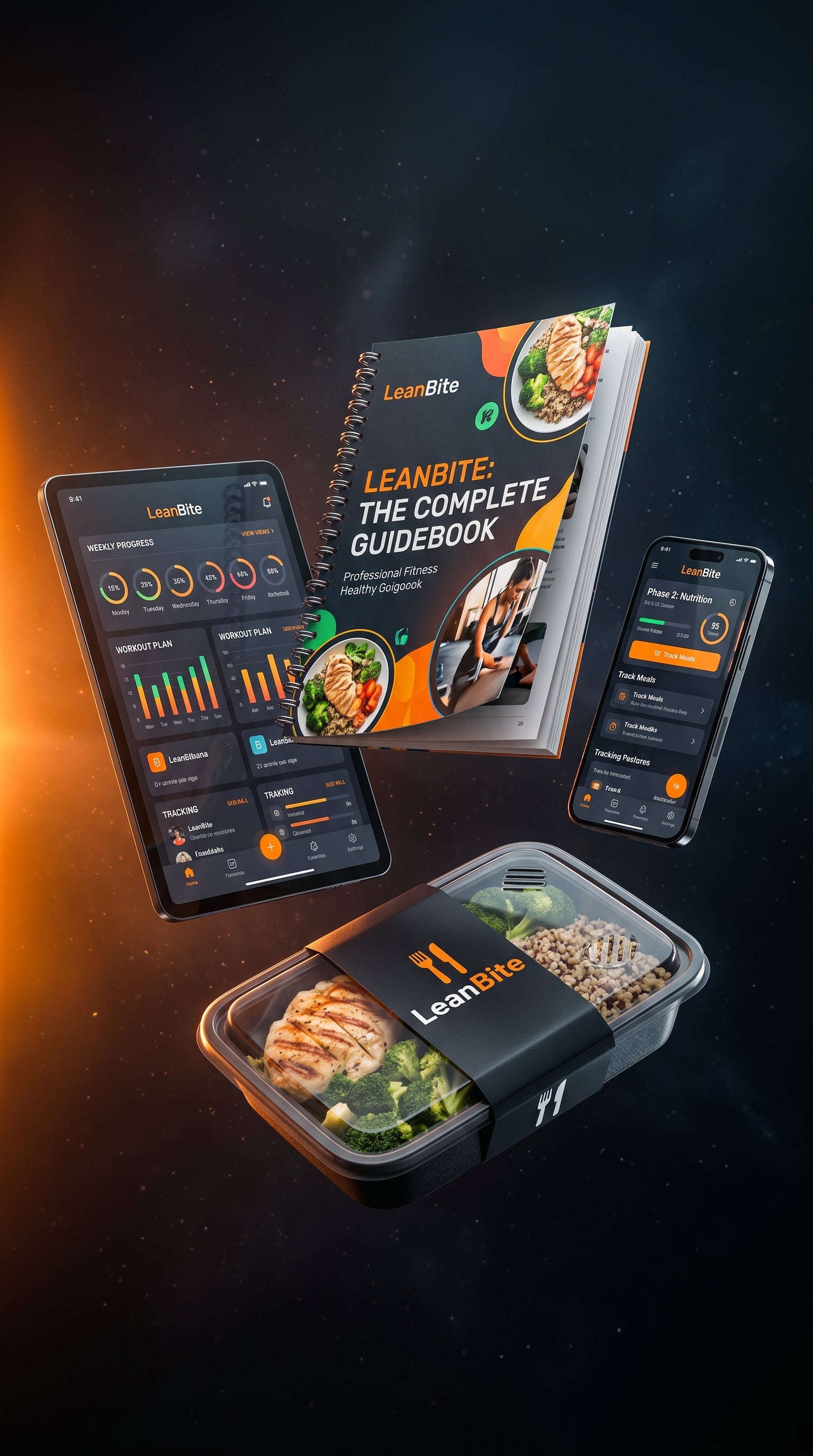
LeanBiteOS helps busy professionals organize high-protein meals, simplify weekly planning, and stay consistent — without the guesswork that usually gets in the way.
Stop Guessing What to Eat.
LeanBiteOS gives busy professionals a complete weekly meal prep system — 300+ high-protein recipes, a macro-tracking masterclass, and a 7-day kickstart protocol built for fat loss.
- ✓ 300+ high-protein, macro-friendly recipes
- ✓ Simple weekly meal prep system
- ✓ Macro-tracking masterclass
Meal prep covers your main meals—but what about snacks? The right high-protein snack can help you avoid vending machines and stay consistent throughout the day. Read our guide to 7 Quick High-Protein Snacks for Work (No Cooking Required) for simple, no-cook options you can keep at your desk.